Table of Contents
- What Is Business Email, and Why It's Different From Personal Email
- Why Business Email Is the Highest-ROI Channel Most Marketing Teams Underuse
- Setting Up Your Business Email Foundation
- Building an Email Marketing Strategy for Your Brand or Clients
- 1. Segment by Relationship, Not Just Demographics
- 2. Match Send Frequency to List Type
- 3. Write Subject Lines Like You'd Write a Hook
- 4. Build a Content Calendar for Email Too
- Tools and Platforms Worth Considering in 2026
- What Changes in Business Email in 2026
- Business Email for Agencies Managing Multiple Clients
- Frequently Asked Questions
- What is business email marketing?
- Do I need business email if I already have a strong social media following?
- What's the best email marketing tool for a small creator brand?
- How is business email different from email marketing software?
- How often should a small brand send marketing emails?
- Final Thoughts
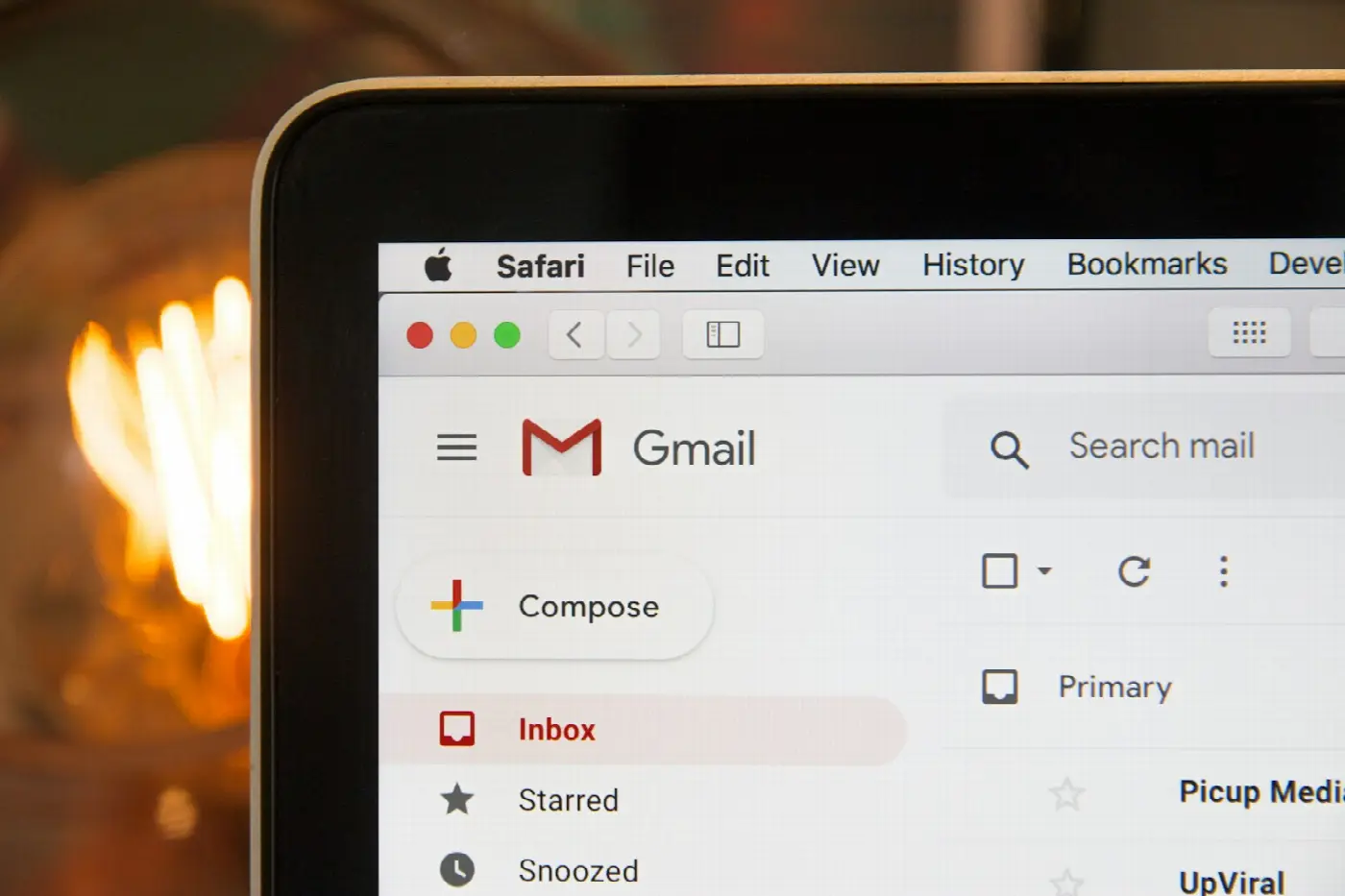
Most social media managers obsess over reach, saves, and completion rate — and completely neglect the one channel they fully own: email. No algorithm change can suppress an email list. No platform outage can take it offline. And for a creator or agency chasing brand deals, a professional email presence is often the deciding factor in whether a partnership pitch gets taken seriously at all.
This guide covers the full picture: what business email actually is, how to set it up, how to use it for marketing (not just outreach), which tools are worth paying for, and what's genuinely changing in 2026.
What Is Business Email, and Why It's Different From Personal Email
A business email address runs on your own domain — hello@yourstudio.co instead of yourstudio2019@gmail.com. It's the difference between looking like an established operation and looking like a side project, even when the work behind both is identical.
For a full breakdown of the definition, the technical components (SPF, DKIM, DMARC), and real examples of how agencies and creators use it, see what a business email address actually is and why it matters. The short version: it's a trust signal that gets evaluated before a brand manager reads a single word of your pitch.
Why Business Email Is the Highest-ROI Channel Most Marketing Teams Underuse
Social platforms optimize for their own retention, not yours. Email doesn't have that conflict of interest — every subscriber on your list chose to be there, and every message you send reaches an inbox you don't have to fight an algorithm to access.
For a marketing agency or creator brand specifically, business email does three jobs at once:
- Outbound credibility. Pitching brands, influencers, or collaborators from a domain-matched address gets replies at a noticeably higher rate than a free consumer address.
- Owned-channel marketing. A newsletter or client update list is an audience you control completely — unlike followers, who are one algorithm change away from never seeing your content again.
- Operational trust. Invoicing, contracts, and client onboarding all move faster when every touchpoint comes from a consistent, verified domain instead of a personal inbox that could belong to anyone.
Setting Up Your Business Email Foundation
Before any marketing strategy matters, the foundation has to be right: a custom domain, a proper email host (Google Workspace, Microsoft 365, or Zoho Mail are the standard choices), and authentication records (SPF, DKIM, DMARC) so your messages land in the inbox instead of spam.
The exact steps — domain setup, MX records, naming conventions, and the deliverability records that keep you out of spam — are covered in full in how to set up a professional business email for your brand. If you haven't done this part yet, do it before anything else in this guide, since every marketing tactic below depends on a properly authenticated sending domain.
Building an Email Marketing Strategy for Your Brand or Clients
Once the foundation is in place, treat email the same way you'd treat a content calendar — deliberate, scheduled, and tied to a goal.
1. Segment by Relationship, Not Just Demographics
A brand-deal prospect list, an existing-client update list, and a fan/subscriber newsletter list should never be the same send. Each has a different expectation and a different acceptable send frequency.
2. Match Send Frequency to List Type
| List Type | Recommended Frequency | Primary Goal |
|---|---|---|
| Brand outreach / cold pitch | One-off, highly personalized | Get a reply, not a click |
| Client updates | Weekly or bi-weekly | Retention, reduce churn |
| Newsletter / fan list | Weekly to monthly | Owned-audience engagement |
| Invoice / billing | Transactional, as needed | Get paid on time |
3. Write Subject Lines Like You'd Write a Hook
The same instinct that makes a strong Reel hook works in a subject line: specific, benefit-led, no clickbait that the body doesn't deliver on. "Quick idea for your Q3 campaign" consistently outperforms "Let's collaborate!" because it signals a concrete, low-effort ask.
4. Build a Content Calendar for Email Too
If you already run a content calendar for social posts, extend it to cover newsletter sends and outreach batches — treating email as an afterthought is the most common reason lists go stale and open rates decline.
Want an Email Strategy That Actually Converts Brand Deals?
We help creators and small agencies build outreach and newsletter systems that turn a cold list into signed partnerships.
Tools and Platforms Worth Considering in 2026
| Tool | Best For | Notes |
|---|---|---|
| Google Workspace | Day-to-day branded inbox | Foundation layer, not a marketing tool |
| Mailchimp | Small newsletters, simple automations | Easiest starting point for non-technical teams |
| ConvertKit (Kit) | Creators building a subscriber-first business | Strong tagging and segmentation for creator audiences |
| Flodesk | Visual, design-forward newsletters | Flat pricing regardless of list size |
| Beehiyv | Newsletter-as-a-business models | Built-in monetization and referral features |
Match the tool to the job: your everyday inbox (Google Workspace/Microsoft 365) and your marketing send tool (Mailchimp, ConvertKit, Flodesk, Beehiiv) are almost always two separate pieces of software, not one.
What Changes in Business Email in 2026
Three shifts are worth planning around this year:
- Authentication is no longer optional. Gmail and Yahoo's bulk sender requirements — SPF, DKIM, and DMARC alignment — are now enforced strictly, not just recommended. Any list over roughly 5,000 sends a day without proper authentication risks outright rejection, not just spam-folder placement.
- AI-assisted personalization at scale. Tools increasingly let small teams write genuinely personalized outreach at the volume that used to require a large team — meaning the bar for a "good" cold pitch has risen, since generic mail-merge sends are easier than ever to spot.
- Zero-party data matters more than list size. With privacy restrictions tightening across platforms, what a subscriber directly tells you (via a signup form, a preference center, a quiz) is becoming more valuable than inferred data — a smaller, well-segmented list increasingly outperforms a large, undifferentiated one.
These shifts mostly reward the same discipline that works everywhere else in marketing: fewer, better-targeted sends beat mass blasts, and a properly configured, authenticated domain is now a baseline requirement rather than a nice-to-have. This mirrors the same fundamentals covered in B2B social media strategy — the channel changes, but the underlying discipline (know your audience, earn the send, don't waste the relationship) doesn't.
Business Email for Agencies Managing Multiple Clients
If you're running client accounts rather than a single brand, a few extra practices matter:
- Separate domains per client relationship where possible, or clearly branded sub-addresses (
clientname@youragency.com), so nothing gets confused across accounts. - Shared inboxes for team continuity. A
team@oraccounts@address with shared access prevents client questions from stalling because one person is unavailable — essential once you're actively managing a remote social media team. - Consistent invoicing addresses. Route billing through a dedicated
billing@orinvoices@address so financial conversations don't get buried in day-to-day pitch threads.
Frequently Asked Questions
What is business email marketing?
Business email marketing is the practice of using a professional, domain-branded email address and sending platform to reach subscribers, clients, or prospects — covering everything from newsletters and brand outreach to client updates and invoicing, all sent from a verified business domain.
Do I need business email if I already have a strong social media following?
Yes — social platforms can change their algorithm or suspend an account at any time, while an email list is an owned channel you fully control. Most established creators treat email as insurance against platform dependency, not a replacement for social.
What's the best email marketing tool for a small creator brand?
It depends on your goal: Mailchimp is the simplest starting point, ConvertKit (Kit) suits creators building a subscriber-first business, Flodesk suits visually-driven newsletters, and Beehiiv suits newsletter-as-a-business models with built-in monetization.
How is business email different from email marketing software?
Business email (Google Workspace, Microsoft 365, Zoho Mail) is your everyday branded inbox for one-to-one conversations like pitches and client replies. Email marketing software (Mailchimp, ConvertKit, Flodesk) is built for one-to-many sends like newsletters and campaigns — most teams need both, not one or the other.
How often should a small brand send marketing emails?
Most newsletter-style lists perform best at a weekly to monthly cadence — frequent enough to stay top of mind, infrequent enough to avoid fatigue. Transactional and client-update emails follow their own schedule based on need, not a fixed marketing calendar.
Final Thoughts
Business email doesn't get the same attention as the platform of the month, which is exactly why it's still one of the highest-leverage investments a small creator brand or marketing agency can make in 2026. Get the foundation right — a real domain, proper authentication, a dedicated marketing tool — and every pitch, newsletter, and client update starts from a position of credibility instead of having to earn it from zero.
Want this executed for you?
Our agency team builds and runs social engines for B2B and SaaS brands.
Written by Mehran Shahmiri
B2B marketing strategist helping SaaS companies build revenue-generating social engines.
Follow on LinkedIn →