Table of Contents
- What "Best Time to Post" Actually Means
- The Analogy: It's Like Store Opening Hours, Not a Traffic Light
- Why the Concept Exists in the First Place
- Real Examples of What "Best Time" Looks Like in Practice
- Example 1: A B2B SaaS Creator
- Example 2: A Teen-Focused Fashion Brand
- Example 3: A Global Fitness Creator
- What "Best Time to Post" Doesn't Mean
- How This Differs From General "Best Time" Advice Online
- Frequently Asked Questions
- What does "best time to post" mean on TikTok?
- Is there one best time that works for every account?
- Does posting at the "best time" guarantee more views?
- How often does the "best time" change?
- Is the best time to post the same on every platform?
- Final Thoughts
Type "best time to post on TikTok" into Google and you'll get a dozen infographics all confidently disagreeing with each other — one says 6 AM, another says 10 PM, a third insists it's Tuesday at 9 AM specifically. They can't all be right, and the reason is simple: they're answering the wrong question with a single number.
"Best time to post" isn't a universal time slot. It's shorthand for a much narrower idea: the window when your specific followers are most likely to be scrolling, and therefore most likely to give your video the fast early engagement that decides whether TikTok pushes it further.
What "Best Time to Post" Actually Means
The phrase refers to the period in your posting schedule when publishing a video statistically correlates with stronger early performance — more views, likes, comments, and shares in the first 60–90 minutes after you hit publish, compared to posting at other times.
It does not mean a fixed hour that applies to every TikTok account on earth. A fitness creator whose audience is mostly commuters checking TikTok on their lunch break has a completely different "best time" than a gaming creator whose audience is teenagers online after school lets out. Both windows are real, and neither one transfers to the other's account.
The Analogy: It's Like Store Opening Hours, Not a Traffic Light
Think of your TikTok posting schedule less like a traffic light (one universal signal — green means go) and more like deciding when to open a physical store. A coffee shop near an office park does its best business at 7–9 AM on weekdays. A bar three blocks away does its best business at 9 PM on Fridays. Both are "right" — because "best" is defined entirely by when their customers show up, not by some fixed rule about commerce in general. Posting on TikTok works the same way: the platform doesn't reward a specific hour, it rewards you showing up when your audience already is.
Why the Concept Exists in the First Place
TikTok's ranking system, like the social media algorithm on every other platform, leans heavily on early engagement velocity — how fast a video accumulates watch time, likes, comments, and shares right after it's published. A strong early spike signals to TikTok that the video is worth testing on a wider audience via the For You Page. A slow trickle of engagement signals the opposite, and the video quietly stops getting pushed.
If your ideal viewers are asleep, at work with their phone away, or otherwise not on the app when you post, your video misses that critical early-engagement window — even if the content itself is genuinely good. That's the entire mechanical reason "timing" matters at all. It's not a magic multiplier; it's about not wasting your first hour on an empty room. For a deeper breakdown of what the algorithm is actually scoring, see our guide on how TikTok's FYP algorithm works.
Real Examples of What "Best Time" Looks Like in Practice
Example 1: A B2B SaaS Creator
A B2B software company posting explainer TikToks found their strongest engagement clustered around 8–9 AM and 12–1 PM on weekdays — because their audience was marketers and founders checking TikTok during commute and lunch breaks, not evenings. Their "best time" looked nothing like a typical consumer-brand chart.
Example 2: A Teen-Focused Fashion Brand
A clothing brand targeting Gen Z shoppers found the opposite pattern: almost no engagement before 3 PM on weekdays, then a sharp climb from 3:30–6 PM (right after school) and a second peak at 8–10 PM. Posting a video at 9 AM for this account was functionally posting into silence.
Example 3: A Global Fitness Creator
A fitness creator with a large US and UK following had to split the difference — testing showed two separate engagement bumps roughly five hours apart, corresponding to each region's morning routine. Their solution wasn't picking one "best" time, it was alternating posting slots and tracking which region a given video performed best with.
| What people assume "best time" means | What it actually means |
|---|---|
| A universal clock time (e.g., "7 PM is best") | The window your specific followers are most active |
| Something you look up once and reuse forever | Something that shifts as your audience grows and changes |
| The single biggest lever for reach | One input among many — content quality and hook strength matter more |
| The same for every platform | Different per platform, because each has different usage patterns |
Not Sure When Your Audience Is Actually Online?
We pull your real TikTok Analytics data and map out your account's actual best posting windows — no generic charts.
What "Best Time to Post" Doesn't Mean
It's worth being just as clear about what the concept isn't, because these are the most common misreadings:
- It's not a guarantee of virality. Posting in your best window improves your odds of a strong start; it doesn't override weak content, a bad hook, or a video that doesn't hold attention.
- It's not permanent. Your audience's active hours shift as your follower base grows, as you gain viewers in new time zones, or as their daily habits change (school schedules, seasons, time changes).
- It's not the same across platforms. Your Instagram audience's active hours and your TikTok audience's active hours often don't match, even if it's the same people following you on both.
- It's not more important than consistency. A creator posting reliably at a "decent" time will usually outperform one who chases a "perfect" time sporadically.
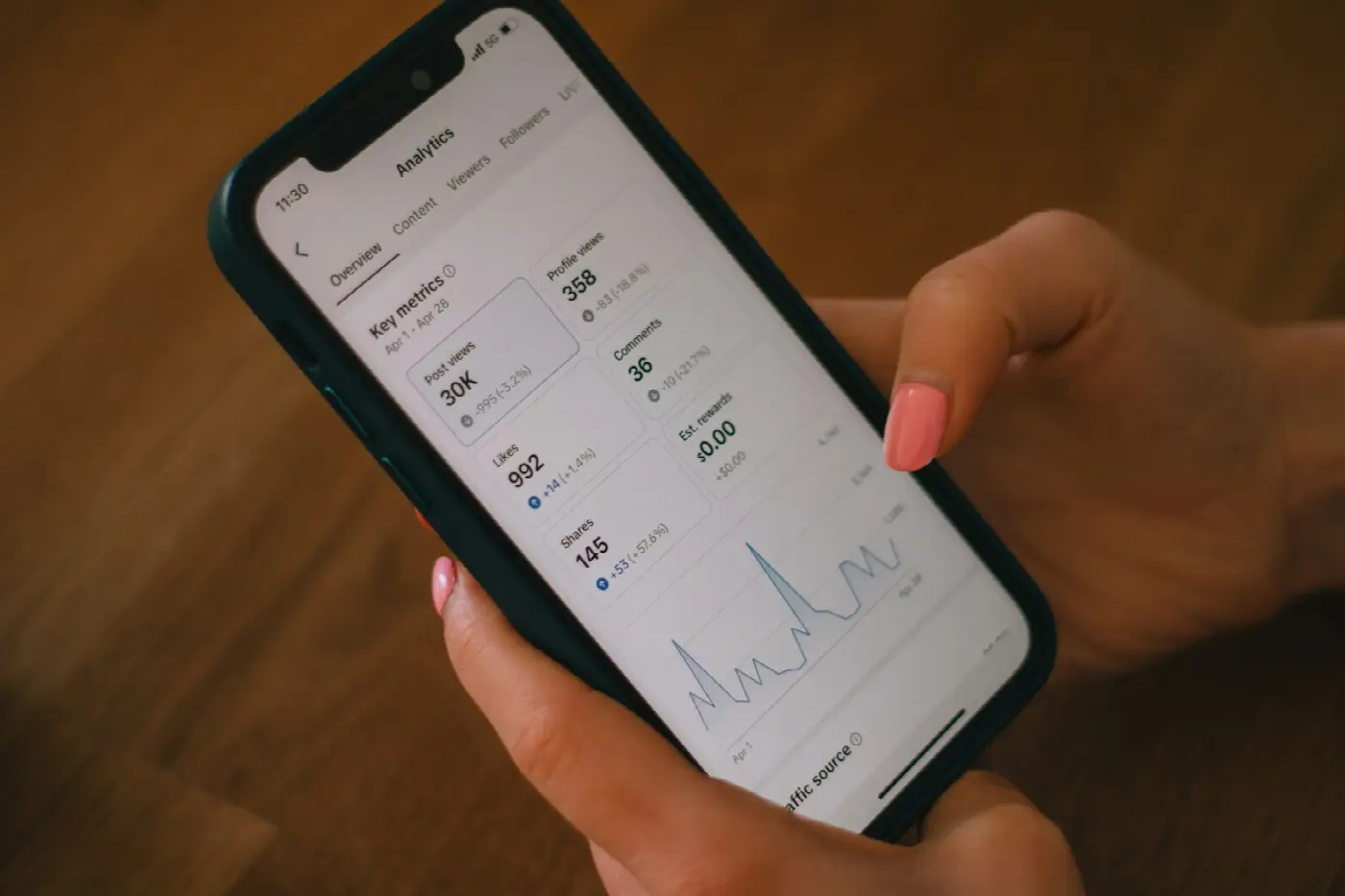
If you want the mechanics of actually finding your own window rather than guessing at general trends, our step-by-step walkthrough on finding your best time to post on TikTok covers exactly where in TikTok Analytics to look.
How This Differs From General "Best Time" Advice Online
Most "best time to post" charts you find online are aggregated averages across thousands of accounts in a broad category — useful as a starting point when you have zero data (a brand-new account, for instance), but not a substitute for your own numbers once you have them. Once you've posted consistently for even 3–4 weeks, your own TikTok Analytics will tell you more about your actual audience than any general chart ever could. For the fuller 2026 breakdown of general benchmarks plus how to personalize them, see Best Time to Post on TikTok in 2026: The Complete Guide.
This same logic applies well beyond TikTok — see our explainer on what determines the best time to post on Instagram for how the concept translates to a feed-and-Stories platform instead of a For You Page.
Frequently Asked Questions
What does "best time to post" mean on TikTok?
It refers to the specific window when your followers and target audience are most active on the app, which correlates with stronger early engagement and a better chance the algorithm pushes your video further via the For You Page — not a fixed universal clock time.
Is there one best time that works for every account?
No. General benchmark charts exist as a starting point for brand-new accounts with no data yet, but every account's real "best time" depends on its specific audience's time zone, age group, and daily habits, and can only be confirmed with your own analytics.
Does posting at the "best time" guarantee more views?
No. It improves the odds your video gets a strong early engagement signal, which helps the algorithm decide to test it further — but content quality, hook strength, and watch time still do most of the work.
How often does the "best time" change?
It can shift as your follower base grows, as you pick up viewers in new time zones, or as your audience's routines change seasonally. Most creators recheck their analytics every 4–6 weeks.
Is the best time to post the same on every platform?
No. TikTok, Instagram, and YouTube each have different usage patterns even among the same overall audience, so a time that works well on one platform often doesn't transfer directly to another.
Final Thoughts
"Best time to post" is a useful concept once you stop treating it as a fixed answer and start treating it as a question you answer with your own data. The phrase describes a pattern specific to your audience, not a secret hour hiding in a chart somewhere. Once you understand that, the next step is simple: go find your account's actual pattern instead of borrowing someone else's.
Want this executed for you?
Our agency team builds and runs social engines for B2B and SaaS brands.
Written by Mehran Shahmiri
B2B marketing strategist helping SaaS companies build revenue-generating social engines.
Follow on LinkedIn →