Table of Contents
- The Three Factors That Actually Determine It
- 1. When Your Specific Followers Are Online
- 2. The Algorithm's Early-Signal Test Window
- 3. The Content Format
- Real Examples of How This Plays Out
- Why Generic "Best Time" Charts Are Only a Starting Point
- How This Differs From Hashtag or Caption Optimization
- Frequently Asked Questions
- What determines the best time to post on Instagram?
- Is there one universal best time to post on Instagram?
- Does the best time change based on what I'm posting?
- How do I find my account's actual best time to post?
- Why did my best time to post change recently?
- Final Thoughts
The "best time to post" on Instagram is the window when the highest concentration of your specific followers are active on the app, combined with the moment that gives your post the strongest early engagement signal before Instagram decides how far to distribute it. It is not a fixed clock time that applies to every account.
Think of it like opening a store. You wouldn't set your hours based on when a store three cities over gets foot traffic — you'd look at when your actual customers walk past your block. Instagram's "best time" works the same way: it's local to your audience, not a universal schedule that applies to every brand equally.
The Three Factors That Actually Determine It
1. When Your Specific Followers Are Online
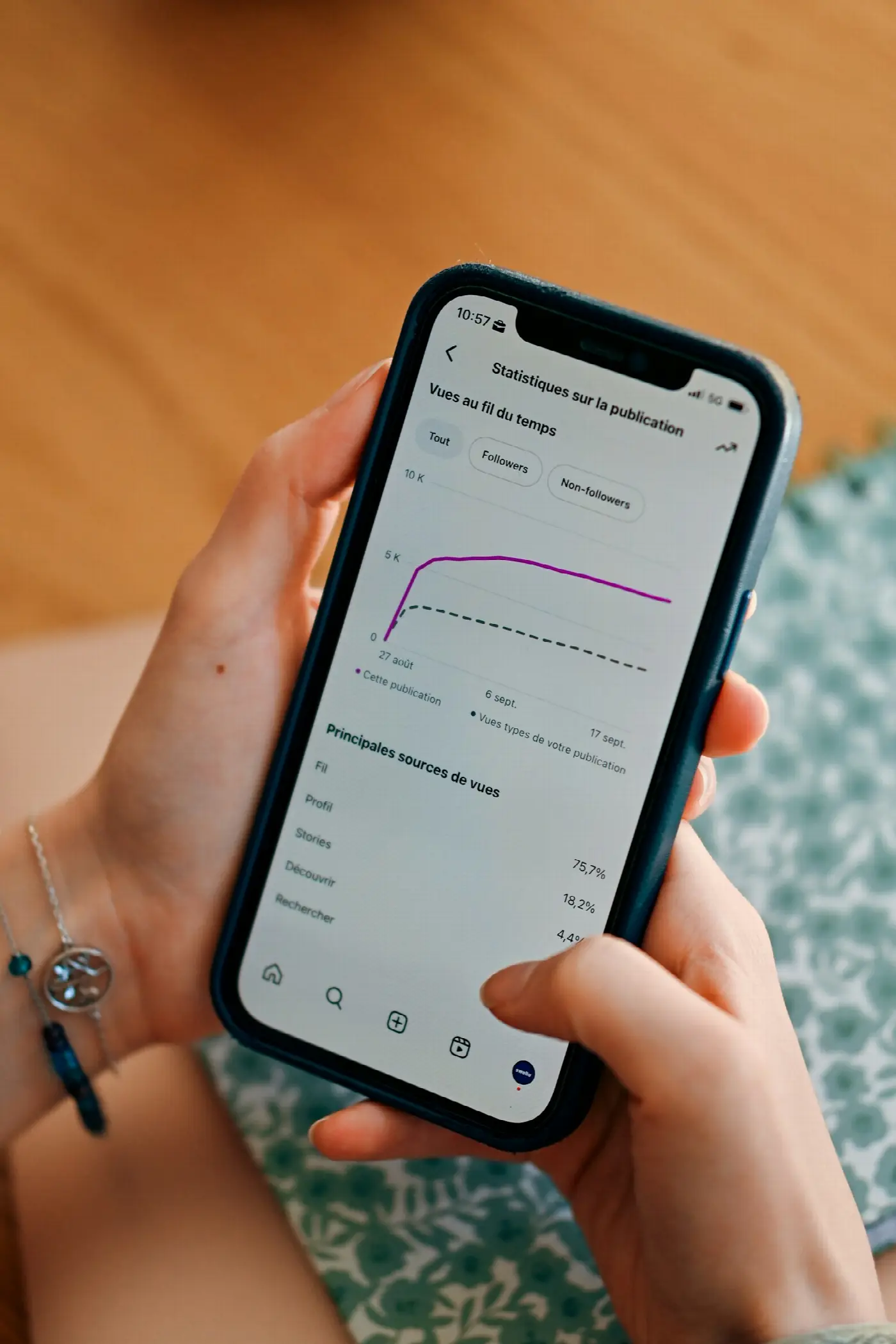
This sounds obvious, but it's the factor most people skip in favor of a generic chart. A fitness account with a mostly US-based, 9-to-5 audience will peak in early morning and evening. A gaming account with a global, largely teen-to-20s audience might peak late at night. Instagram Insights' "Most Active Times" tab is built specifically to answer this per account — it's the ground truth, and it overrides any published benchmark. If you want the exact click-by-click process for pulling and applying this data, see our step-by-step guide to scheduling posts at your best time.
2. The Algorithm's Early-Signal Test Window
Instagram doesn't show your post to your full audience the instant you publish. It first releases it to a small sample and watches how they react — save rate, watch time, shares, comments — in roughly the first 30 to 90 minutes. If that sample engages well, distribution expands. This is the same mechanism explained in what the social media algorithm actually does: the platform is constantly predicting what keeps people scrolling, and your post's fate is largely decided in that early window. So "best time" really means "the time when the most people are around to generate a strong early signal" — not just when the most total people happen to be online across the whole day.
3. The Content Format
A Reel, a feed carousel, and a Story are ranked by different signals, so "best time" shifts by format:
| Format | Primary early signal | Timing implication |
|---|---|---|
| Reels | Watch time and completion rate | Post slightly before peak audience activity so the algorithm has time to test with early viewers |
| Feed carousels/photos | Saves and dwell time | Less urgent — performs well as long as it's posted during an active window, even if not the exact peak minute |
| Stories | Real-time viewership | Timing-critical — only matters while people are actively online, since Stories disappear in 24 hours |
Real Examples of How This Plays Out
A B2B SaaS company posting LinkedIn-style content to Instagram found their "best time" was 8–9am on weekdays — because their audience was marketing managers checking phones before work, not the 7–9pm consumer-brand slot most "best time" charts recommend. Following a generic chart would have meant posting into an empty room.
A regional restaurant chain discovered their Reels performed dramatically better posted at 4pm rather than lunchtime — because their content (dinner specials, evening ambiance) matched what people were actually deciding at 4pm: where to eat that night. The "best time" wasn't about when people were most active in general, it was about when the content was most relevant to a decision the audience was making.
A creator account with a global following split their posting into two daily slots — one timed to US morning and one timed to Southeast Asian evening — after Insights showed two distinct activity peaks rather than one. A single "best time" didn't exist for that account; two did.
Not Sure What's Actually Driving Your Timing?
We dig into your account's real engagement data — not generic charts — and tell you exactly what's shaping your best posting windows.
Why Generic "Best Time" Charts Are Only a Starting Point
Published benchmark charts (Tuesday at 11am, Wednesday at 2pm, and so on) are aggregated across thousands of accounts in different industries, timezones, and audience types. They're a reasonable starting hypothesis if you have no data yet — useful the same way understanding what "best time to post" means for TikTok is a useful parallel concept — but they average out exactly the account-specific signal that determines your actual best time. Once your account has enough followers to generate real Insights data, that data should always override the generic chart.
How This Differs From Hashtag or Caption Optimization
It's worth being clear that timing is only one lever. Posting at the perfect time with a weak caption or no relevant tags still underperforms — timing amplifies good content, it doesn't rescue mediocre content. If you haven't nailed down your hashtag strategy or the setup in your scheduling and publishing tools, fixing timing alone won't move the needle nearly as much.
Think of timing as opening the store door at the right hour and content as what's actually on the shelves. Getting the hours right brings people past the window. It doesn't make them buy something they weren't interested in to begin with. Brands that chase "best time" hacks while ignoring content quality are usually optimizing the wrong variable — the door was never the problem.
Frequently Asked Questions
What determines the best time to post on Instagram?
Three factors combine to determine it: when your specific followers are actually active (from your own Insights data), the algorithm's early-signal test window (roughly the first hour after posting), and the content format, since Reels, carousels, and Stories are ranked by different engagement signals.
Is there one universal best time to post on Instagram?
No. Aggregated "best time" charts are averages across many different account types and audiences. Your account's actual best time depends on your specific followers' timezone, habits, and how they engage with your particular content format.
Does the best time change based on what I'm posting?
Yes. Reels benefit from being posted slightly before your audience's peak so early watch-time can build before the crowd arrives, while Stories are only effective while people are actively online in real time.
How do I find my account's actual best time to post?
Open your Instagram Professional Dashboard, go to Insights, and check the "Most Active Times" section under your total followers — it shows the specific hours and days your own audience is online.
Why did my best time to post change recently?
Audience activity shifts with follower growth, seasonal changes, and algorithm updates. It's worth rechecking your Insights data monthly rather than assuming a time slot that worked six months ago is still optimal.
For the fuller picture — including 2026-specific benchmark windows by industry and what's shifted in how Instagram tests content — see our complete guide to the best time to post on Instagram in 2026.
Final Thoughts
"Best time to post" isn't a fixed answer you look up once — it's a moving target shaped by who follows you, what you're posting, and how Instagram's early-signal system evaluates it. Treat generic charts as a starting hypothesis, then let your own account's data take over. That's the only version of "best time" that's actually true for your account.
Want this executed for you?
Our agency team builds and runs social engines for B2B and SaaS brands.
Written by Mehran Shahmiri
B2B marketing strategist helping SaaS companies build revenue-generating social engines.
Follow on LinkedIn →