Table of Contents
- Step 1: Set a Goal That Isn't "Growth"
- Step 2: Choose Platforms Based on Where the Buyer Already Is
- Step 3: Split Your Budget — Organic vs. Paid
- Step 4: Build a Content System, Not a Content Calendar
- Step 5: Pick Your Tool Stack
- Step 6: Report on Numbers That Survive a Budget Review
- Common SMM Mistakes to Avoid
- Frequently Asked Questions
- What is the first step in building an SMM strategy?
- How much of an SMM budget should go to paid ads?
- Which social media platform is best for SMM in 2026?
- How is SMM different from just posting on social media?
- How long does it take to see results from an SMM strategy?
- Final Thoughts
You already know the SMM full form is Social Media Marketing. The harder question — the one that actually determines whether it works — is how to build an SMM strategy from a blank slate and run it without wasting a budget.
This guide walks through that process step by step: setting goals that map to real business outcomes, choosing platforms deliberately instead of "being everywhere," splitting budget between organic and paid, building a content system that doesn't collapse after week three, and reporting numbers that survive a budget review.
Step 1: Set a Goal That Isn't "Growth"
"Grow our social media" is not a strategy — it's a wish. Every SMM program needs one primary goal, chosen from these four, because each one changes everything downstream:
- Brand awareness — optimize for reach and impressions among a defined audience. Right fit for new brands or new market entry.
- Community and retention — optimize for engagement rate and repeat interaction among existing customers. Right fit for subscription and loyalty-driven businesses.
- Lead generation — optimize for click-through and form completions. Right fit for B2B, high-ticket, and service businesses.
- Direct sales — optimize for conversion rate and return on ad spend. Right fit for D2C and e-commerce.
Pick one as primary. The others can be secondary, but a team optimizing content for awareness while being judged on sales will fail both.
Step 2: Choose Platforms Based on Where the Buyer Already Is
Do not choose platforms based on where your team enjoys posting. Choose based on documented buyer behavior:
| Platform | Best For | Weakest For |
|---|---|---|
| D2C, visual products, younger consumer audiences | Long-form B2B education | |
| B2B, executive branding, recruiting-adjacent content | High-volume consumer reach | |
| YouTube (long + Shorts) | Search-driven discovery, tutorials, deep trust-building | Fast trend-jacking |
| TikTok | Younger consumer reach, trend-native brands | Formal, compliance-heavy industries |
| X (Twitter) | Real-time industry conversation, tech and finance niches | Broad consumer reach |
Most brands need 2-3 platforms run well, not 5 run poorly. Pick the ones matching your Step 1 goal and your actual audience, then commit.
Want an SMM Engine That Actually Converts?
We build and run full social media marketing systems for B2B and SaaS brands — strategy, content, and distribution.
Step 3: Split Your Budget — Organic vs. Paid
A 2026 SMM budget should never be 100% organic or 100% paid. A workable starting split for most brands:
- 60-70% organic content production — this is where trust and creative testing happen. Underinvesting here means paid ads have nothing good to promote.
- 20-30% paid distribution — boosting organic content that's already proven to work outperforms building paid-only creative from scratch.
- 10% UGC and creator sourcing — increasingly its own line item rather than a subset of "content," since UGC creative now consistently outperforms in-house produced ads on cost per acquisition.
Adjust the ratio as data comes in — a channel converting well on paid deserves more budget than one that isn't, regardless of the starting split.
Step 4: Build a Content System, Not a Content Calendar
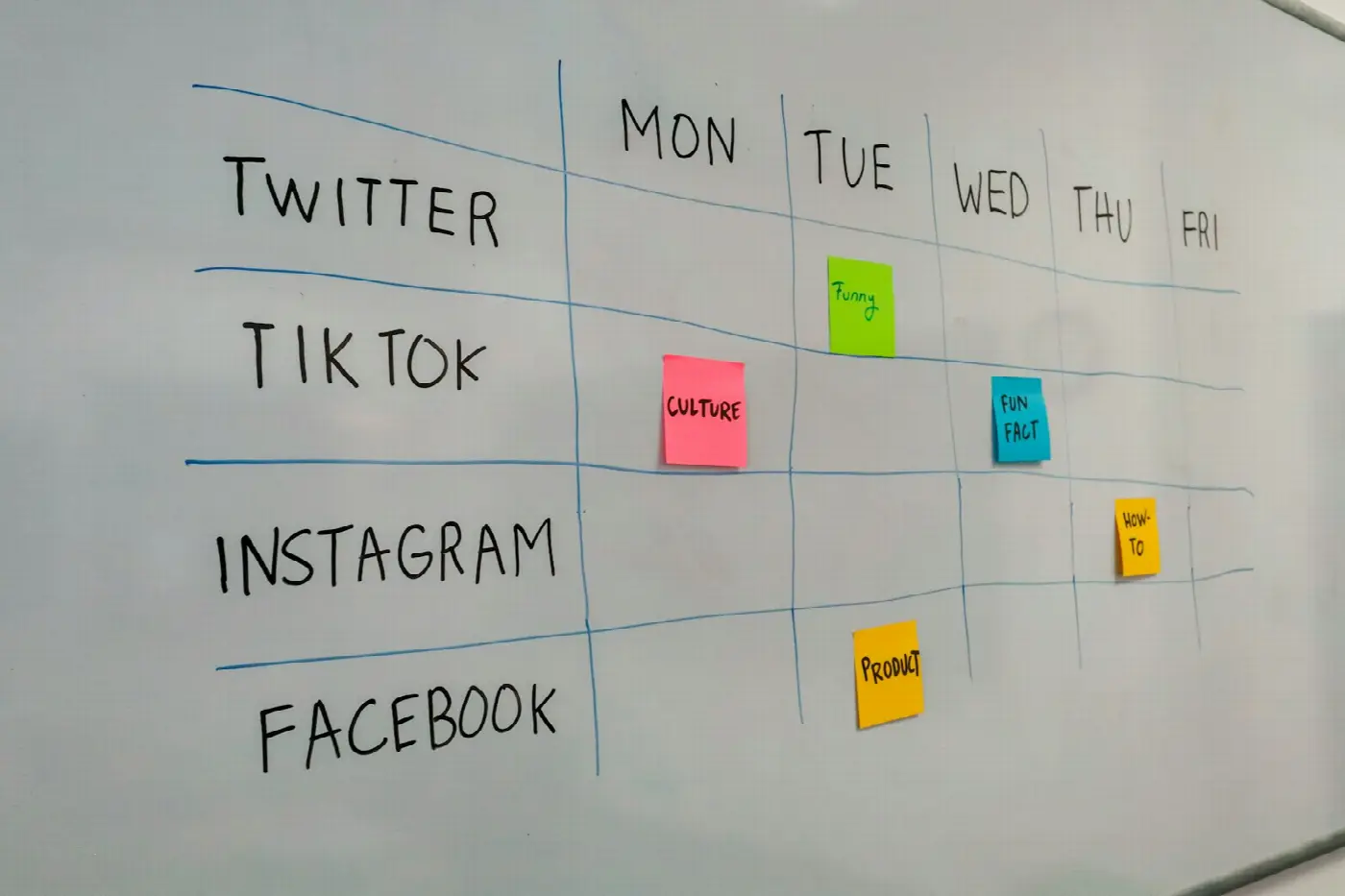
A calendar tells you what to post. A system tells you why each piece exists. Structure content into three repeating pillars:
- Authority content — educational, "how we think about X" posts that build trust with your target buyer. This is what earns follows and shares.
- Proof content — case studies, testimonials, results, UGC and screen-recorded demos. This is what converts an interested follower into a lead or sale.
- Culture content — behind-the-scenes, team, and founder-led posts. Lower direct conversion, but this is what makes people actually want to follow an account rather than just consume one post and leave.
A healthy weekly mix is roughly 50% authority, 30% proof, 20% culture. Brands that skip culture content plateau in followers even when their conversion content performs well, because nothing gives a stranger a reason to hit follow.
Step 5: Pick Your Tool Stack
At minimum, an SMM operation needs three categories of tooling:
- Scheduling and publishing — for consistency across multiple platforms without manual daily posting. See our social media management tools roundup for a comparison.
- Analytics and listening — to catch what's working and what's being said about you before it becomes a crisis. Covered in depth in our social media listening guide.
- Creative production — even a lightweight setup (phone, basic mic, a lighting kit) beats no consistent production pipeline at all.
Step 6: Report on Numbers That Survive a Budget Review
Reach, likes, and follower count do not justify a budget in 2026. Report on:
- Cost per qualified lead or cost per acquisition, not cost per click. A cheap click that never converts is not a win.
- Channel-attributed pipeline or revenue, tracked through UTM parameters and a "how did you hear about us" field to catch dark-social attribution gaps.
- Content-level performance, not just account-level — knowing which specific posts or formats drove results tells you what to make more of.
- Organic-to-paid lift — how much better proven organic content performs once boosted, which justifies the paid budget line directly.
For a deeper, execution-focused breakdown of the video-first and creator-led tactics driving results in 2026 specifically for B2B and SaaS teams, see our complete guide to social media marketing in 2026.
Common SMM Mistakes to Avoid
- Posting on every platform at once from day one. Spreads your production budget too thin to do any single platform well.
- Treating paid social as a way to fix bad organic content. Paid distribution amplifies whatever you feed it — amplifying weak creative just burns budget faster.
- No usage-rights process for UGC or creator content. Leads to disputes and content you can't legally run as an ad. Covered fully in our UGC guide.
- Reporting vanity metrics to leadership. Erodes budget trust over time even when the channel is actually working.
Frequently Asked Questions
What is the first step in building an SMM strategy?
Set a single primary goal — brand awareness, community/retention, lead generation, or direct sales — before choosing platforms or content types. The goal determines which metrics matter and which platforms are worth the investment; skipping this step is the most common reason SMM programs stall.
How much of an SMM budget should go to paid ads?
A workable starting point for most brands is 60-70% organic content production, 20-30% paid distribution, and roughly 10% UGC/creator sourcing, adjusted over time based on which channels actually convert.
Which social media platform is best for SMM in 2026?
There is no single best platform — it depends on the primary goal and where the target audience already spends time. B2B and lead-gen focused brands generally see the strongest results on LinkedIn and YouTube; D2C and consumer brands see stronger results on Instagram and TikTok.
How is SMM different from just posting on social media?
SMM is a structured practice with a defined goal, budget allocation across organic and paid, a repeatable content system, and measurement tied to business outcomes. Posting without those elements is content publishing, not marketing — it rarely produces a measurable return.
How long does it take to see results from an SMM strategy?
Organic authority-building typically takes 2-3 months of consistent posting before meaningful trust and reach develop. Paid social can show measurable results (CPA, conversion rate) within 2-4 weeks, which is why most 2026 SMM programs run both simultaneously rather than sequentially.
Final Thoughts
The SMM full form is easy to memorize. Building a strategy that survives contact with a real budget review is the actual work: one clear goal, platforms chosen deliberately, a defensible organic-to-paid split, a repeatable content system, and reporting tied to pipeline instead of vanity metrics. Follow those six steps in order, and social media marketing stops being a guessing game and becomes one of the most measurable channels a brand runs in 2026.
Want this executed for you?
Our agency team builds and runs social engines for B2B and SaaS brands.
Written by Mehran Shahmiri
B2B marketing strategist helping SaaS companies build revenue-generating social engines.
Follow on LinkedIn →