Table of Contents
- Why "Proof Beats Polish" Isn't a Trend, It's a Correction
- Where AI Actually Helps (and Where It's Backfiring)
- The 25% vs. 49% Gap: What Marketers Are Already Telling You
- The Creator Credibility Squeeze
- How to Actually Produce More Authentic-Feeling Content (Without Faking It)
- Frequently Asked Questions
- Why is unpolished content outperforming polished brand content in 2026?
- Should brands stop using AI in their content production?
- What does the 25% vs. 49% AI adoption gap actually mean?
- Why is it getting harder to find good creators to work with?
- How can a brand make content feel more authentic without actually faking it?
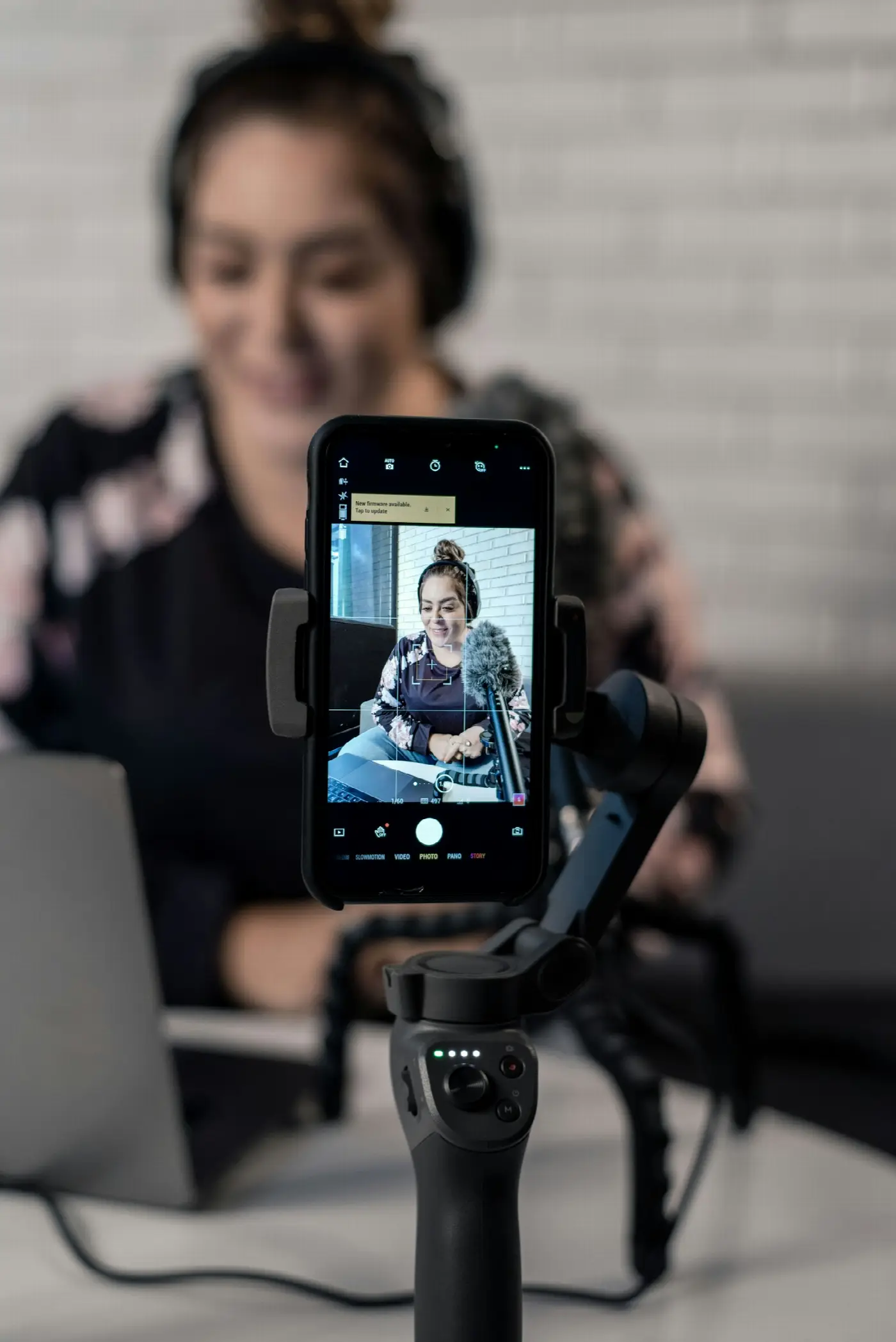
Something has quietly flipped in social feeds this year. The single-take video shot on a phone, lit badly, with a stumble left in — that's the post outperforming the agency-produced brand spot with the same message. Founder judgment calls, real customer results, unscripted process footage, and raw product demos are converting better than glossy content built to look expensive.
This isn't a one-platform quirk. It's happening across Instagram, TikTok, YouTube, and LinkedIn simultaneously, and it's forcing a real strategy question for anyone running a 2026 content calendar: if proof is beating polish, what happens to all the AI-generated content brands have been leaning on to scale production? The answer isn't "stop using AI." It's that AI has quietly split into two very different jobs — one it's genuinely good at, and one that's starting to work against the brands using it.
This piece breaks down why unpolished content is winning, where AI tools actually help versus where they're backfiring, a real adoption gap that tells you how cautious marketers already are about AI in creator work specifically, and what to actually do about all of it.
Why "Proof Beats Polish" Isn't a Trend, It's a Correction
For years, production value was treated as a proxy for credibility — the better something looked, the more a brand seemed to be taken seriously. That proxy has broken down. Audiences trained by years of feed-scrolling can now spot "made to sell me something" almost instantly, and their trust response to it is negative, not neutral.
What's replacing polish as the credibility signal is proof: a customer showing a real result, a founder explaining a decision they actually made, a screen-recorded demo with no music bed, a behind-the-scenes clip that wasn't planned as content. None of this requires low quality on purpose — it requires the content to look like it happened rather than like it was produced. That distinction is the entire trend.
For brands, this means the content that used to sit at the bottom of the priority list — quick founder videos, unscripted customer calls, raw demo screen recordings — deserves a bigger share of the calendar than the polished brand spot that took two weeks to make. If you're rebuilding your production mix around this, our complete SMM strategy guide covers how to balance proof content against authority and culture content without losing consistency.
Where AI Actually Helps (and Where It's Backfiring)
None of this means AI has no place in a 2026 content operation. It has become completely normal — expected, even — on the ideation and production side: brainstorming angles, generating content variants to test, targeting, and campaign optimization. Teams that skip AI there are just working slower for no reason.
Where it breaks down is anywhere the output is meant to be the human moment rather than support it. Visibly AI-generated video, AI voiceovers standing in for a founder's actual voice, and synthetic "testimonials" are increasingly recognized on sight — and audiences respond with the same distrust they give an over-produced ad. The tool that speeds up your ideation isn't the same tool that should stand in for your storytelling.
| Where AI genuinely helps | Where AI is backfiring |
|---|---|
| Idea brainstorming and hook variations | Replacing an actual human on camera |
| Generating content variants to test | AI voiceovers standing in for founder/team voice |
| Audience targeting and ad optimization | Synthetic "customer" testimonials |
| Repurposing existing human-made content | Fully AI-generated "authentic" story formats |
The pattern is consistent: AI is a production accelerant, not a storyteller. Brands treating it as the former are scaling faster. Brands treating it as the latter are quietly losing trust they can't easily measure until conversion rates start slipping. For the tactical side of using tools like ChatGPT correctly within that boundary, see our ChatGPT for social media marketing guide — it stays deliberately on the production side of that line.
Not Sure Where the AI Line Should Be for Your Brand?
We help brands audit their content mix and rebuild a production system that uses AI for speed without losing the human proof that actually converts.
The 25% vs. 49% Gap: What Marketers Are Already Telling You
There's a data point worth sitting with: roughly 49% of marketers use AI somewhere in their general social media marketing work, but only about 25% use AI anywhere in their influencer or creator marketing specifically. That's not a lag — general adoption had a two-year head start everywhere else. It's a deliberate gap.
Marketers running creator and influencer programs are, in effect, voting with their workflows: they trust AI with captions, scheduling, targeting, and optimization, but are noticeably more hesitant to let it near the part of the funnel that depends on a real person being believable. That instinct lines up with what's converting right now — the channels closest to "a real human said this" are the ones brands are protecting from AI involvement.
If you're deciding where AI belongs in your own stack, this gap is a useful gut check: general content production is fair game, but anything that reads as a person's direct voice — creator content, testimonials, community replies — deserves the same caution. Our community management guide covers this same logic applied to the reply and engagement side of the account, where a real person answering matters just as much as who's on camera.
The Creator Credibility Squeeze
Here's the part most brands aren't planning for yet: as more feeds fill with visibly AI-generated content, the supply of creators who can reliably produce content that reads as genuinely human is shrinking relative to demand. Brands need more authentic creator content than ever to compete on the proof-beats-polish trend, but the pool of creators who can consistently deliver it — without it curdling into something that looks manufactured — is getting harder to source from.
This is part of why AI adoption in influencer work is so much lower than in general social — brands sourcing creator content are protecting the one asset that's becoming scarcer, not more automatable. It also connects to a shift on the platform side: AI avatars are starting to show up in creator-adjacent content on platforms like TikTok, making genuinely human creators even more differentiated by contrast. Our breakdown of TikTok's 2026 algorithm changes and AI avatars goes deeper on what that shift looks like from the platform's side.
Practically, this means creator sourcing should be treated less like a commodity purchase and more like retention: when you find a creator who reliably reads as real, the smart move is a longer relationship, not a one-off brief. Replacing a credible creator is getting more expensive as fewer of them exist relative to brand demand.
How to Actually Produce More Authentic-Feeling Content (Without Faking It)
- Lower the production bar on purpose for proof content. A phone, decent light, and one take is often the right call for a testimonial or demo — polishing it can undo the exact signal that makes it convert. Our guide to what actually makes a high-converting Reel covers this directly: rougher, faster, more real usually beats the version with three edit passes.
- Put a real person's judgment in the content, not just their face. A founder explaining why a decision was made reads as more credible than a founder reading a script, even when the script is good.
- Use AI upstream, not on camera. Let it generate the ten hook options, the shot list, the variant angles — then have an actual human execute the one that gets picked.
- Treat creator relationships as an asset to protect. Once you find someone who reliably delivers content that reads as real, keep them, brief them well, and don't burn the relationship chasing a cheaper option that can't do the same thing.
- Audit your feed for "obviously AI" tells. Synthetic voiceovers, uncanny stock-AI b-roll, and testimonials that feel too smooth are worth cutting even if they were cheap to make — cheap production that costs you trust isn't actually cheap.
Frequently Asked Questions
Why is unpolished content outperforming polished brand content in 2026?
Audiences have gotten fast at recognizing content built to look expensive and respond to it with less trust, not more. Proof — real results, real process, real judgment calls — reads as credible in a way glossy production no longer does on its own, which is why lower-production, single-take content is converting better across platforms this year.
Should brands stop using AI in their content production?
No. AI remains genuinely useful for ideation, generating content variants, targeting, and optimization — the ideation and production side of the workflow. The problem isn't AI itself, it's using it to replace the human storytelling and on-camera presence that audiences are specifically responding to right now.
What does the 25% vs. 49% AI adoption gap actually mean?
About 49% of marketers use AI somewhere in general social media marketing, but only about 25% use it anywhere in influencer or creator marketing. The gap shows marketers are deliberately more cautious about AI where content needs to read as a real person's voice, which lines up with what's actually converting in 2026.
Why is it getting harder to find good creators to work with?
As AI-generated content fills more of the feed, credible creators who can reliably produce content that reads as genuinely human are becoming scarcer relative to demand. Brands need more authentic creator content than ever to compete on the proof-beats-polish trend, which is pushing smart brands toward longer-term creator relationships instead of one-off briefs.
How can a brand make content feel more authentic without actually faking it?
Lower the production bar on purpose for proof-driven content like testimonials and demos, keep AI upstream in ideation rather than on camera, and let real people communicate real judgment instead of reading scripts. Authenticity isn't a style to imitate — it's the result of showing something that actually happened.
Want this executed for you?
Our agency team builds and runs social engines for B2B and SaaS brands.
Written by Mehran Shahmiri
B2B marketing strategist helping SaaS companies build revenue-generating social engines.
Follow on LinkedIn →