Table of Contents
- Why Social Commerce Is Accelerating Now
- What a Brand Actually Needs to Run a Live Shopping Event
- What This Looks Like for Indian D2C Brands
- Creators as a Sales Channel, Not Just Reach
- Getting Started: A Realistic First Event
- Frequently Asked Questions
- What is social commerce?
- Is TikTok Shop available for brands in India?
- What does a brand need to run a live shopping event?
- How is live shopping different from a regular influencer post?
- Should creator partnerships be paid on commission or a flat fee?
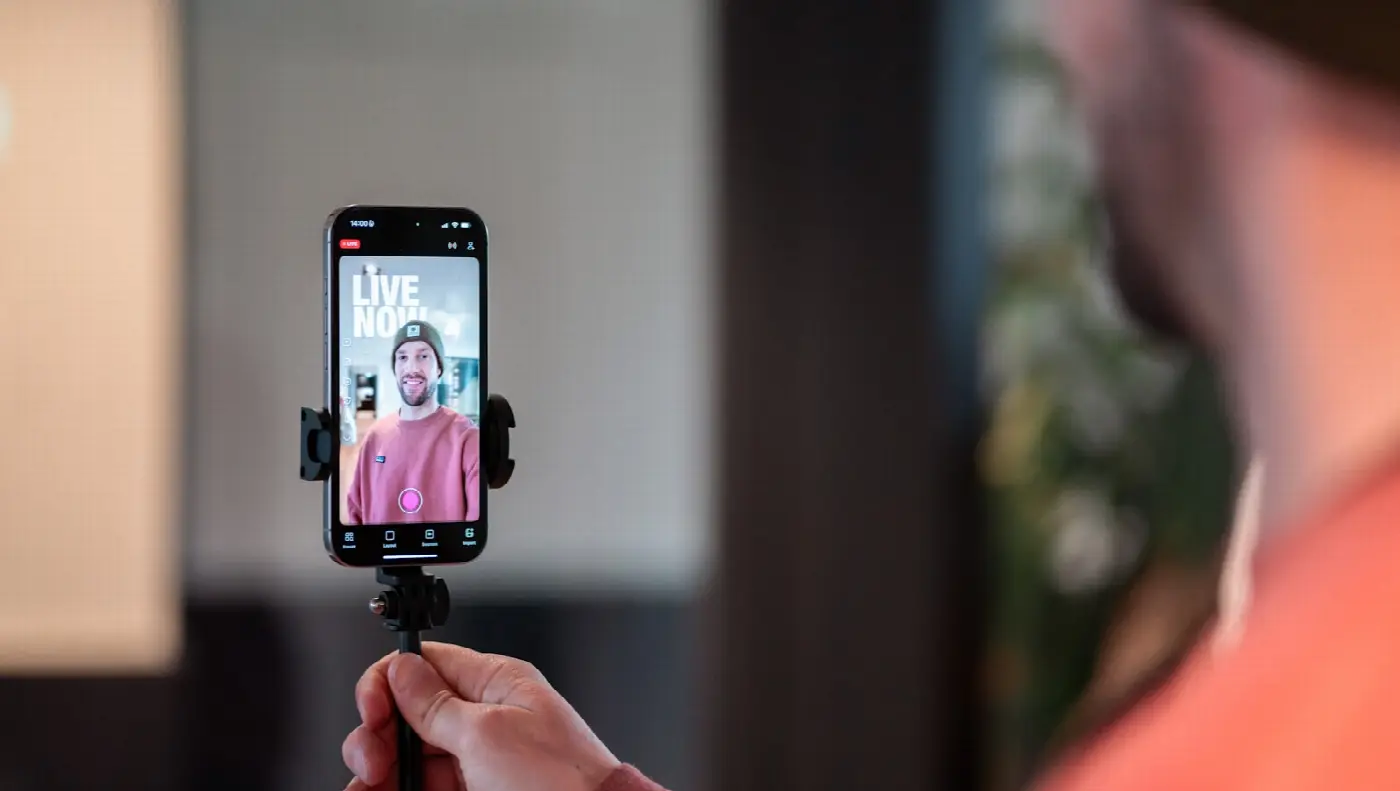
Social commerce means buying a product inside the social app you're already scrolling, without ever clicking out to a separate e-commerce site. Live shopping is its most direct form: a creator or brand hosts a livestream, tags products on screen in real time, and viewers check out without leaving the stream. In 2026, livestream and shopping features are expanding across major social platforms as a core part of the feed, not a bolted-on experiment.
For brands, this changes what "social media" is actually for. A channel that used to end at a link in bio now has a checkout built into it. That shift is why creators are increasingly treated as a real sales channel rather than a reach or awareness line item — a distinction that matters a lot when you're deciding where to put budget in 2026.
This guide covers why social commerce is accelerating now, what a brand actually needs to run a live shopping event, and how to think about it if you're a D2C brand building for the Indian market specifically.
Why Social Commerce Is Accelerating Now
Three things are compounding at once, and each one removes a reason a viewer used to drop off before buying.
The path from discovery to purchase got shorter. Historically, a viewer saw a product on social, had to remember it, open a browser, search for it, and complete checkout on an unfamiliar site — a sequence with a drop-off point at every step. Native in-app checkout collapses that into one continuous action.
Creators sell better than ads do. A creator demonstrating a product live, answering questions in real time, and reacting honestly to it functions like a trusted friend's recommendation rather than an advertisement. That trust converts at a different rate than a static product ad, which is part of why brands are shifting budget from pure reach campaigns toward creator-led selling.
Platform-native checkout reduces the drop-off that used to kill conversion. Every redirect to an external site is a chance for a buyer to get distracted, hit a slow-loading page, or simply lose momentum. Keeping the entire journey — discovery, demo, question, purchase — inside one app removes nearly all of that friction.
Put together, these three shifts mean a livestream is no longer just top-of-funnel content. It can be the entire funnel, start to finish, in a single session.
What a Brand Actually Needs to Run a Live Shopping Event
Live shopping is not "go live and hope people buy." It needs the same setup discipline as any other sales channel:
- Product tagging set up in advance. Every item you plan to feature needs to be tagged and linked to checkout before you go live — fumbling with product setup mid-stream loses buyers who were ready to act.
- A host who can sell, not just talk. Whether that's an in-house team member or an outside creator, the host needs to handle product questions, objections, and pacing live. This is a different skill than writing a caption, and it's worth treating it as one when you're staffing a stream.
- A clear, repeated CTA. Viewers drop in and out throughout a stream. The call to action — what to tap, what code to use, what's about to sell out — needs to be repeated every few minutes, not stated once at the start.
- A checkout flow that's actually been tested. Test the tagging, the checkout, and the confirmation flow before you're live in front of an audience. A broken checkout link during a live event is the single most avoidable way to lose a sale that was already won.
- A plan for what happens after the stream. Recorded replays, follow-up posts featuring what sold well, and retargeting viewers who watched but didn't buy all extend the value of a single live session well past its runtime.
None of this requires an enterprise budget. It requires treating a livestream as a scheduled sales event with its own checklist, not an ad-hoc broadcast.
Ready to Run Live Shopping That Actually Converts?
We help D2C and creator-led brands plan, staff, and run live shopping events end to end — from product tagging to post-stream retargeting.
What This Looks Like for Indian D2C Brands
The India-specific picture has one important boundary: TikTok has been unavailable in India since 2020 and has not returned, so TikTok Shop and TikTok livestream shopping — both expanding globally in 2026 — are simply not part of the toolkit for an Indian brand. Building a strategy around a platform your audience can't access is a wasted planning cycle.
What Indian brands do have is substantial. Instagram Live Shopping lets creators and brands tag products during a livestream directly to viewers who are already spending hours a day in the app. YouTube Shopping and YouTube Live give brands a second native option, particularly useful for higher-consideration products where a longer, more detailed live demo builds more confidence than a 60-second clip does. Both sit inside platforms Indian consumers already use daily, which is exactly the condition that makes native checkout effective in the first place.
This also intersects directly with the scale of India's creator economy, which is large and growing fast — see our breakdown in India's creator economy in 2026 for the numbers behind that growth. As that economy matures, more of it is shifting from pure content deals toward performance-based, sales-linked partnerships, which is precisely what live shopping formalizes: a creator's audience trust converted directly into a transaction, measured in real revenue rather than reach.
Globally, the picture includes platforms beyond what's available in India. TikTok's 2026 changes — covered in TikTok algorithm changes 2026 — are worth understanding as international market context, since global creators and brands operating outside India are building live shopping strategies around it. An Indian brand should track that context for where the format is heading, without expecting to use that specific platform at home.
Creators as a Sales Channel, Not Just Reach
The biggest mental shift live shopping requires is treating creator partnerships as a sales channel with its own operating discipline, not as a marketing line item measured by impressions. That has real business implications:
| Old Model (Awareness) | New Model (Sales Channel) |
|---|---|
| Paid per post or per reach | Paid on commission, per-sale, or hybrid |
| Success = views and engagement | Success = units sold and revenue |
| One-off content deals | Ongoing, repeatable partnerships |
| Managed as a marketing expense | Managed as a distribution channel |
Treating creators as a sales channel means the business processes around them need to grow up too — contracts that specify commission structure, timely payouts, and proper invoicing for creators who are now generating real revenue rather than posting for a flat fee. If your team is still handling creator payments manually or with ad hoc paperwork, that's the first gap to close. Our guide on what invoicing software actually does covers the basics of formalizing that process as creator payouts scale.
None of this replaces a solid scheduling and content operation underneath it — live shopping events still need to be planned, promoted, and followed up on like any other content. If that part of your stack isn't solid yet, our best social media schedulers roundup is a good place to start before you layer live shopping on top.
Getting Started: A Realistic First Event
Don't launch live shopping with your most complex product line or your biggest campaign. Start with one product that already sells well organically, one creator or in-house host who's comfortable on camera, and one platform — Instagram or YouTube for most Indian D2C brands. Run it, measure units sold and watch-to-purchase conversion rather than just viewer count, and use that first event to fix your checkout flow and pacing before scaling to a regular schedule. A messy first stream on a low-stakes product teaches you more than a polished plan that never ships.
Frequently Asked Questions
What is social commerce?
Social commerce is buying a product directly inside a social media app — through tagged products, in-feed checkout, or a live shopping stream — without clicking out to a separate e-commerce website. It removes the redirect step that traditionally caused buyers to drop off between seeing a product and completing a purchase.
Is TikTok Shop available for brands in India?
No. TikTok has been unavailable in India since 2020 and has not returned, so TikTok Shop and TikTok live shopping are not usable by Indian brands or creators. Indian D2C brands should build live shopping strategy around Instagram Live Shopping and YouTube Shopping/Live instead.
What does a brand need to run a live shopping event?
At minimum: products tagged for checkout in advance, a host who can sell and handle questions in real time, a CTA repeated throughout the stream, a tested checkout flow, and a follow-up plan using the replay and retargeting. Skipping any of these usually shows up as lost sales during the live event itself.
How is live shopping different from a regular influencer post?
A regular influencer post drives awareness or a click to another site, with a delay and multiple drop-off points before purchase. Live shopping combines the demo, the trust of a creator's live reaction, and checkout into one continuous session, which is why it converts differently than a standalone post or ad.
Should creator partnerships be paid on commission or a flat fee?
As live shopping and social commerce mature, more brands are shifting toward commission or hybrid pay structures tied to units sold, since that aligns creator incentives with actual revenue rather than just content output. Flat-fee deals still make sense for pure awareness content, but sales-linked live events increasingly warrant performance-based pay.
Want this executed for you?
Our agency team builds and runs social engines for B2B and SaaS brands.
Written by Mehran Shahmiri
B2B marketing strategist helping SaaS companies build revenue-generating social engines.
Follow on LinkedIn →